Hormone therapy
that starts with
real answers.
Tired all the time, sleeping badly, or just not feeling like yourself? Hormones can be part of the story. We measure before we prescribe, so you know what's actually going on.

What hormone therapy actually does
Your glands release hormones that act like a messaging network, steering energy, sleep quality, body composition, mood, bone strength, focus and sex drive. When certain hormones drop far enough to cause problems, therapy aims to bring them back into a healthy range.
Some decline is a normal part of getting older. For women it often arrives fairly quickly in the menopause years; for men testosterone tends to slide slowly over decades. A lower number by itself isn't a reason to treat. The question is whether it's changing how you live.
Reasons people ask us for testing
Exhaustion
that a weekend of rest doesn't touch
Midsection weight
creeping on without changes to food or exercise
Restless nights
or waking up repeatedly
Lower sex drive
or changes in sexual function
Shifts in mood
like a short fuse, flatness or worry
Losing strength
even with regular workouts
Fuzzy thinking
and trouble staying on task
Heat surges and sweats
overnight, mostly in women
Bioidentical hormones and how they're given
"Bioidentical" simply means the molecule has the same structure as the one your body makes, as with estradiol, progesterone and testosterone. Plenty of these are standard FDA-approved medications, so the word doesn't automatically mean custom-mixed or herbal.
The more useful distinction is approved products versus pharmacy-compounded versions, which aren't held to the same batch testing. When an approved option fits your needs, that's usually where we start. And no form of hormone is risk-free just because it's labeled bioidentical.
Gels & creams
Applied daily for even levels; others in your home should avoid contact with the skin area.
Injections
Usually every one to two weeks for testosterone, and easy to fine-tune.
Pellets
Placed under the skin and last for months, but can't be dialed back once inserted.
Oral
Used for specific hormones, progesterone being a common example.
Patches
A steady release through the skin, often chosen for estradiol.
Our approach to your care
Labs come first
We don't start anyone on hormones because of a checklist. Your first visit pairs a full blood panel with a medical history and exam, so we can rule in, or rule out, the things that look hormonal but aren't.
Dr. Di Santo stays involved
Dr. Vinson Di Santo or the clinic's nurse practitioner reviews your results, your plan and every dose change. No one else makes those calls.
We keep checking
Starting treatment is the beginning of the work. We repeat labs on a schedule and tune your plan using two inputs together: how you report feeling and what the numbers say.
Straight talk on trade-offs
Every hormone plan has upsides and downsides that depend on your age, sex and family history. We walk through both, and if therapy isn't a good fit for you, we'll say so.
What to expect, step by step
- 1
Talk it through
We go over your symptoms, health and family history, current medications and what you want to feel different.
- 2
Full lab panel
Bloodwork for the relevant hormones plus thyroid, metabolic and other markers that could explain how you feel.
- 3
Results review
Dr. Di Santo or the clinic's nurse practitioner reads your labs alongside your symptoms. If hormones aren't the issue, you'll hear that plainly.
- 4
Your plan
When therapy makes sense, we pick the hormone, starting dose and delivery method, and explain the expected timeline.
- 5
Re-test and adjust
Follow-up labs after you start and at regular intervals, with changes guided by both symptoms and results.
Risks and realistic limits
For the right person, hormone therapy can make a meaningful difference. It's still a medical treatment, and the downsides deserve a clear explanation.
Women: estrogen can shift the odds of blood clots, stroke and some cancers. How much depends on age, years since menopause, whether it's taken by mouth or through the skin, and whether progesterone is part of the plan. Beginning nearer to menopause generally looks more favorable than beginning much later.
Men: testosterone can raise red blood cell counts, affect prostate markers and reduce fertility, so each is tracked. It usually lowers the body's own testosterone and sperm output, which is a big deal if you plan to have children.
Not a fit for everyone: some hormone-sensitive cancers, active liver disease, past unexplained clots and certain heart conditions can rule therapy out. Your complete history decides.
None of this means you should avoid treatment. It means you should be under the care of a physician who measures, monitors and is willing to tell you no.
Hormone therapy questions
How can I tell if I need hormone therapy?+
Bloodwork is the only reliable way. Fatigue, weight gain, poor sleep and low libido fit a hormone picture, but they fit thyroid, iron, sleep and mood problems too. We test broadly and then read the results against what you're experiencing.
When will I notice a change?+
It depends on the hormone and the symptom. Many people feel a lift in energy or mood after roughly a month or so; changes in body composition and libido usually take a few months. Expect some dose fine-tuning early on. Results vary from person to person.
Are bioidentical hormones safer?+
They match your body's own hormone structure, and many are FDA-approved. That doesn't make them risk-free. The bigger question is approved versus compounded products, and we generally favor approved ones when they fit.
Is hormone therapy safe?+
For many people it's appropriate and helpful, but the risks are real and depend on your age, sex and history. That's why we treat it as ongoing medical care with regular labs rather than a refill-and-forget prescription.
Can testosterone affect fertility?+
Yes. It usually suppresses your own testosterone and sperm production, and that effect can linger after stopping. If children are in your plans, tell us up front so we can talk about other approaches.
How often will I need to come in?+
Not often, but monitoring is part of the deal. We repeat labs after you start and then periodically, and blood draws can frequently be done at a lab near you.
Will hormones help me lose weight?+
If a true deficiency is contributing to weight gain, correcting it can help. Hormones aren't a weight-loss program on their own, and they won't outwork a diet that doesn't support your goals.
What does it cost?+
Cost depends on the labs you need, which hormones are involved and the delivery method. Pricing is discussed during a paid consultation; call (305) 514-0318 to schedule.
Serving Miami and South Florida
Patients reach us from across Miami-Dade and nearby Broward communities, including:
Address
51 SW 42nd Ave #101, Miami, FL 33134
Phone
Hours
Monday – Friday, 9:00am – 6:00pm
Saturday & Sunday closed
Find out what's really going on.
One conversation and a thorough lab panel can show whether hormones are the problem or whether something else deserves attention first.
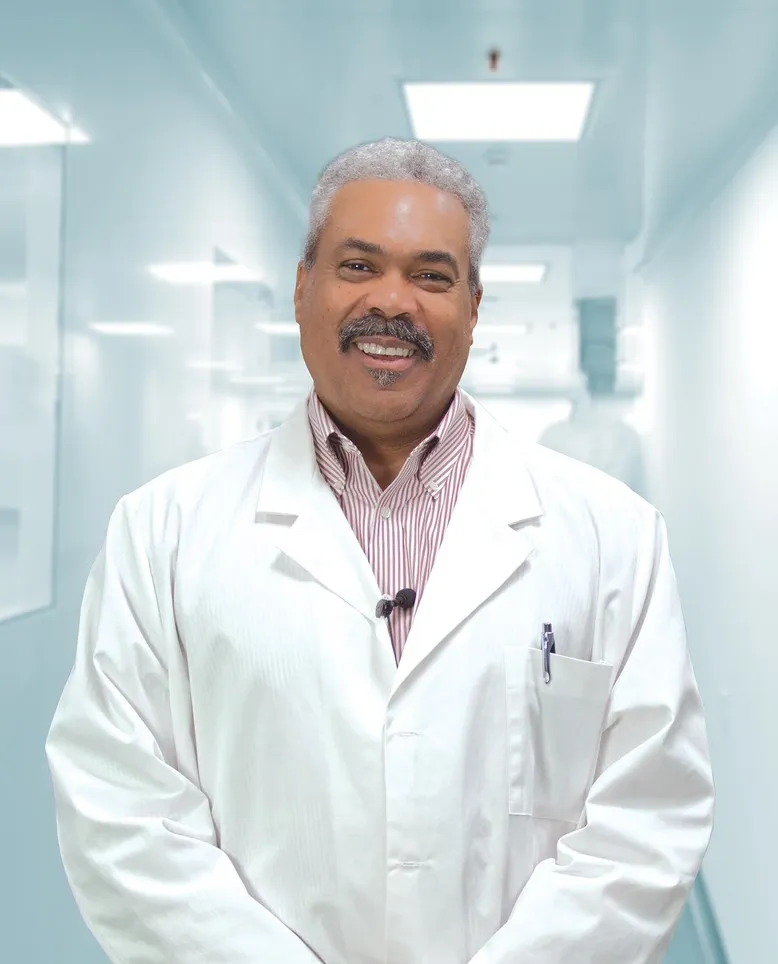
Meet Dr. Di Santo
Dr. Vinson Di Santo is a board-certified family physician whose medical career spans more than three decades. He blends conventional medicine with integrative approaches, drawing on systems biology and lifestyle medicine to look at how the whole body is working.
Along with family medicine, he holds board certifications in clinical nutrition and anti-aging medicine, a mix that suits the lab-driven, whole-person approach Spectrum HRT has built over more than 20 years.